


A school girl's war (General Meeting)
25th July 2026
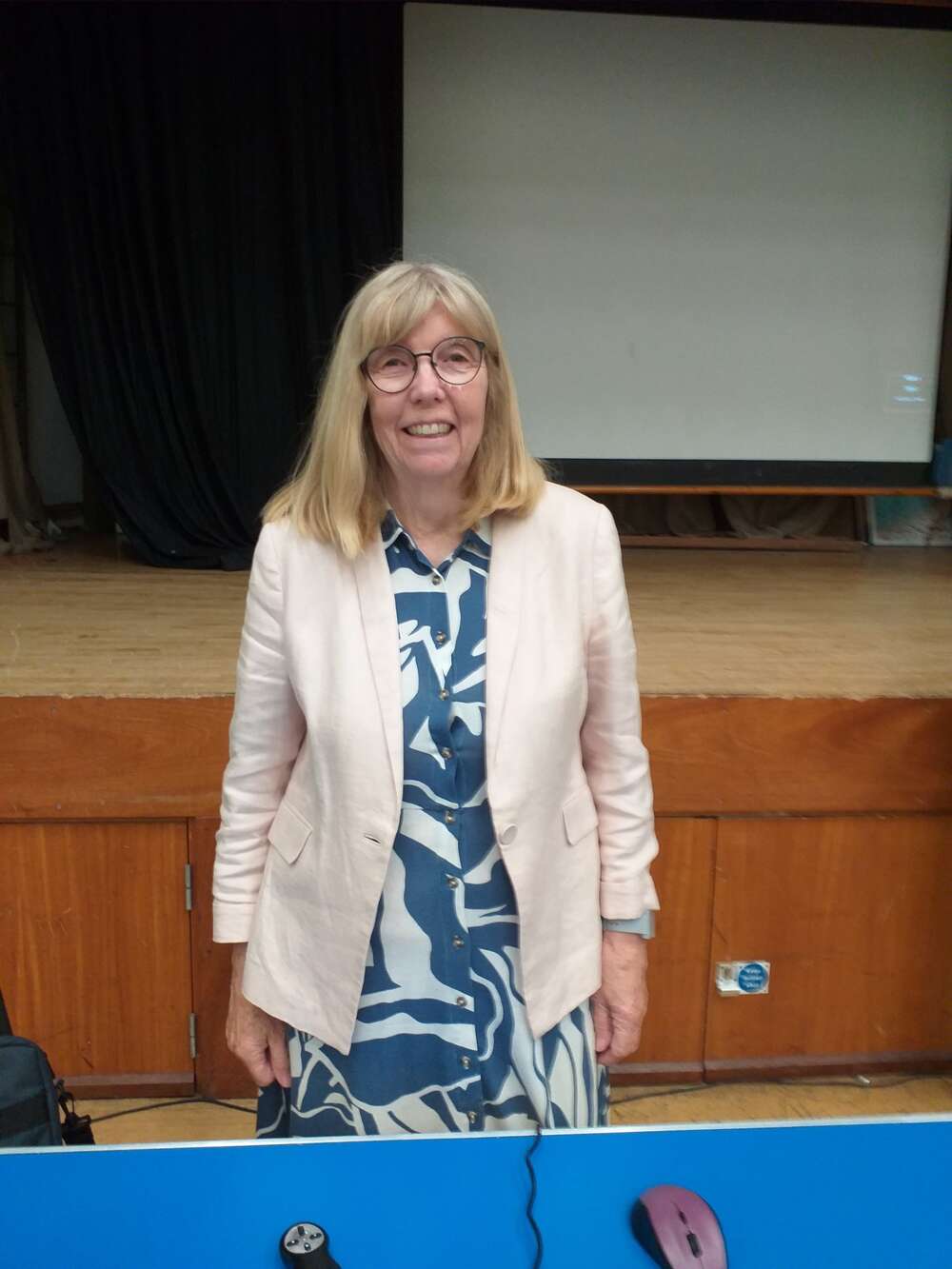
At the July General Meeting we welcomed Mary Smith (photo), a former Headmistress who regaled the story of 'A school girl's war'. It was more than a story as evidence revealed the real lives of school girls at Maidstone Grammar School for Girls during World War 2. Mary had produced a book on the discoveries, having been commissioned by the present Headmistress of the School. These discoveries included six underground war tunnels used as classrooms and a scrap book showing sketches and paintings of the School by Helen Keen, their art teacher. Opening the tunnels and gaining access to school archives and photos allowed Mary to trace and interview 53 old school girls and to use their experiences to compare then and now and document these in her book.
What had happened was that in 1938 the School opened a new building but barely had time to enjoy it before the likelihood of war arose. From Summer 1939 they had to get ready to welcome evacuees. They were also joined that September by Kings Warren Plumstead school despite Maidstone being on the German flight path to London. A large increase in pupils meant everyone had to be drilled to follow instructions, to arrive and to evacuate safely etc. Helen Keen's scrap book paintings and art provided a strongly visual collection of life at that time - the shelters, girls in a tree with gas masks hanging on the branches, girls playing netball in gas masks, teachers taking netting down to the shelters to cut it up for the school windows, girls sitting in the six tunnels, classroom scenes of various subjects being taught including Latin texts. Talking to the old girls and reflecting on the scrap boo, Mary found there were real challenges teaching in the tunnels - the noise, visibility for and of everyone, hard and uncomfortable seating, frequent daily movements back into school and then into the tunnels again maybe several times a day, having to eat down there on occasions, lighting, the safeguarding of pupils whose homes might have been bombed, the lack of air quality and the possibility of gas attacks. However life went on and the teachers and girls were remarkably resilient over the war years.
On VE Day 1945 the netting came down from the windows and in 1948 the tunnels were sealed. The door was closed on this bit of history for many years. Mary's book has opened this up and also shows the old girls who had met up and shared their real life stories in 2016. Bravo to them and their peers and teachers. If anyone wants to know more they can visit the School visitor centre and of course there is more information available on the School website. Many thanks Mary for your work and a brilliant talk.
Contributed by Angela Dowling
